In our experience, most account-based marketing programs do not fail because the strategy was wrong. They fail because the setup was skipped. Teams buy the platform, run a few account-targeted ads, and call it ABM. Three months later the pipeline looks the same and everyone quietly moves on.
Setting up ABM the right way is mostly unglamorous work done before a single ad runs: agreeing on who you sell to, ranking those accounts honestly, mapping the people who actually sign, and wiring measurement so you can tell what is working. Do that, and the channels almost run themselves. Skip it, and no amount of tooling saves you.
Here is the framework we use to set up an ABM strategy that books real meetings.
- ABM is a system, not a channel. The setup decides the outcome.
- Define a sharp ICP first, then build and tier your account list against it.
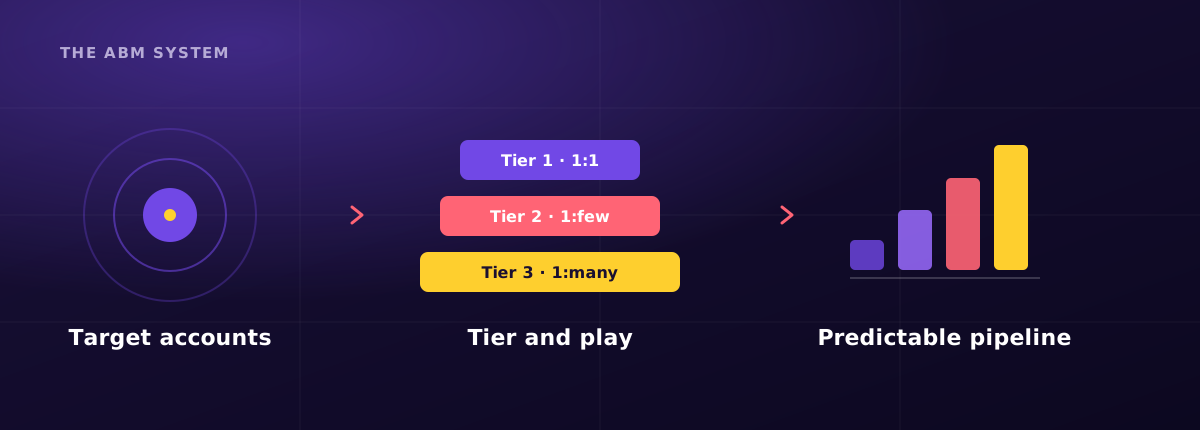
- Match effort to tier: 1:1 for the few, 1:few for the middle, 1:many for the rest.
- Align sales and marketing on the same accounts and the same definition of ready before launch.
- Instrument account-level measurement from day one, or you will not know what worked.
Start with fit, not a tool
The first question is not which ABM platform to buy. It is which accounts are worth this much effort. ABM is expensive attention. You are choosing to spend real time on a small set of companies, so the list has to be right.
Write down your ideal customer profile in plain terms: the firmographics (industry, size, region), the technographics (what they already run), and the trigger events that mean now is the time (new funding, a leadership hire, a tech migration, hiring for a relevant role). If your ICP is "B2B companies with budget," you do not have one yet. Tighten it until a salesperson could look at any company and tell you in ten seconds whether it fits.
Build your account list, then tier it
Once the ICP is sharp, build the list. How you size and agree it decides whether it gets used, which we cover in building a target account list sales will not ignore. Pull from your CRM, enrichment tools, intent data, your sales team's own target accounts, and the customers your competitors name on their own sites. Dedupe it, then do the part most teams skip: tier it honestly.
Not every account deserves the same effort. Tiering is how you spend your time where it pays back. For where the whole motion is heading, see the State of ABM 2026-2027 report.
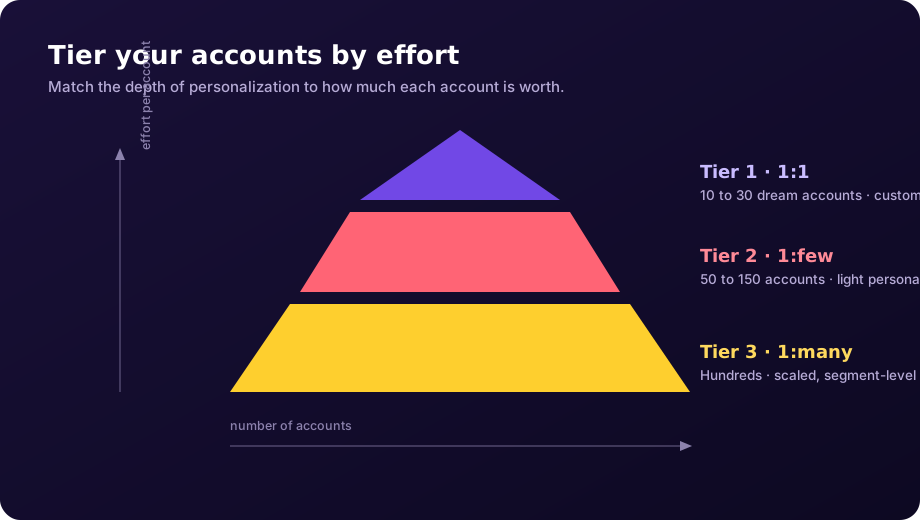
- Tier 1 (1:1): your handful of dream accounts. Fully researched, custom plays, a named executive sponsor. Usually 10 to 30 accounts.
- Tier 2 (1:few): strong-fit accounts grouped by shared pain or industry, with lightly personalized plays. Usually 50 to 150.
- Tier 3 (1:many): the rest of the ICP, run with scalable, segment-level programs. Hundreds.
Map the buying committee
You are not selling to a company. You are selling to the people inside it. For Tier 1 and Tier 2, map that committee before you reach out: the economic buyer, the champion, the day-to-day users, and the blockers (often security, finance, or legal). Gartner's 2025 survey of B2B buyers puts that group at 5 to 16 people spread across up to four functions.
Which of them you reach first is a timing question, answered by the signals that predict pipeline. Each role cares about something different. The champion wants a win, the economic buyer wants return, and security wants to not get fired. Plays that speak to all of them beat plays that shout one message at everyone.
Match plays to tiers
This is where the effort question gets answered. A play is the coordinated sequence of touches across channels for a tier.
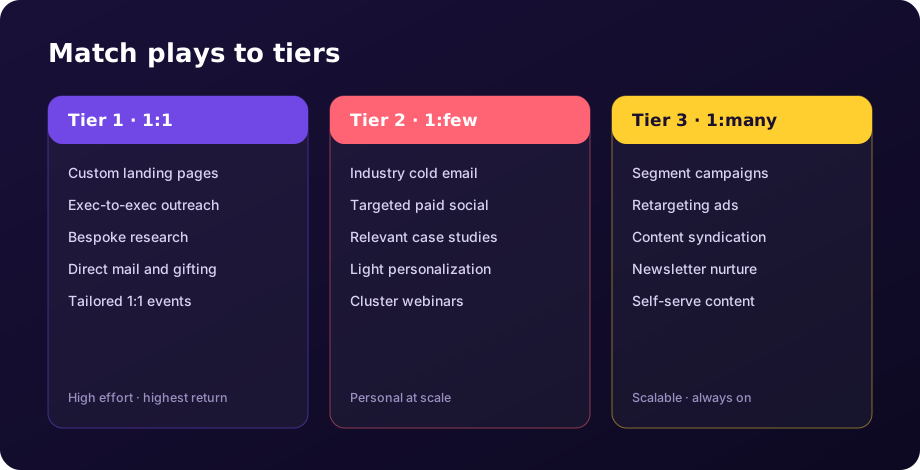
The channels matter less than the coordination. A buyer who gets a relevant email, sees a relevant ad, and lands on a relevant page is being run a play. A buyer who gets three disconnected messages is being spammed.
Align sales and marketing before you launch
ABM dies in the gap between marketing and sales. Before anything goes live, the two teams have to agree on three things: the account list, the definition of an account that is ready for sales, and who does what when an account heats up.
Write it down. A one-page agreement that says "when an account hits this engagement score, marketing hands it to sales within 24 hours, and sales works it within two business days" prevents a common ABM failure, which is accounts quietly dying in the handoff.
Pick the channels your buyers actually use
You do not need every channel. You need the two or three where your specific buyers pay attention. For most B2B, that is some mix of targeted cold email, LinkedIn, paid social, and the website experience itself.
Set up the infrastructure properly: warmed sending domains so cold email lands in the inbox, clean audience lists for ads, and personalized website content for known accounts. Boring infrastructure is what makes the clever plays work.
Instrument measurement from day one
If you cannot measure at the account level, you are flying blind. Before launch, decide how you will track account engagement, pipeline created, and pipeline influenced, and make sure your CRM can roll it up by account, not just by lead.
The numbers that matter: how many target accounts are engaged, how many became opportunities, and how the deals you win map back to your tiers. That last one tells you whether your ICP and tiering were right, which is the whole point of the setup.
Name three target accounts and we will sketch the plays we would run for each, free: the trigger worth acting on, the buying-committee roles to reach, the angle and the first three touches. You keep it whether you hire us or not.
A sane 30/60/90 rollout
You do not have to build everything at once.
- Days 1 to 30: ICP, account list, tiering, sales alignment, and measurement setup.
- Days 31 to 60: launch Tier 2 and Tier 3 plays, and stand up the infrastructure.
- Days 61 to 90: add Tier 1 custom plays, review what is engaging, and cut what is not.
Common mistakes to avoid
- Treating ABM as a channel you switch on, instead of a system you set up.
- A vague ICP that lets every account in.
- Skipping the sales handoff agreement.
- Personalizing everything (unsustainable) or nothing (ignorable).
- Launching before you can measure at the account level.
Set up this way, ABM stops being a campaign you run and becomes the operating system for how you win the accounts that matter. The plays change. The foundation does not.